The Royal Palace in Ubud (Puri Saren Agung) is one of the main historical attractions of Bali.
Located in the very heart of Ubud, the palace serves as a vivid example of Balinese architecture and simultaneously testifies to the rich cultural and political history of the island.
Being a center of attraction for tourists from all over the world, it not only allows one to get acquainted with Balinese royal history but also offers unique cultural events (for example, traditional dance performances).
History of the Royal Palace
The Ubud Royal Palace was built at the end of the 16th century, during the reign of Raja Tjokorda Putu Kandel.
The palace became the residence of the royal family and played an important role in the political and cultural life of Bali. At that time, Ubud was already an important cultural and artistic center of the island, and the palace further significantly strengthened its significance.
During the Dutch colonial era, the palace also played an important role.
Thus, in the 1920s, the Dutch East India Company attempted to capture Bali.
The Ubud royal family, like other local rulers, sought to preserve the independence and identity of their kingdom.
Eventually, Bali was incorporated into the colonial empire, but despite this, the palace continued to be the residence of the heirs of the Balinese royal family.
Today, the royal family still resides in one part of the palace.
Architecture and Design
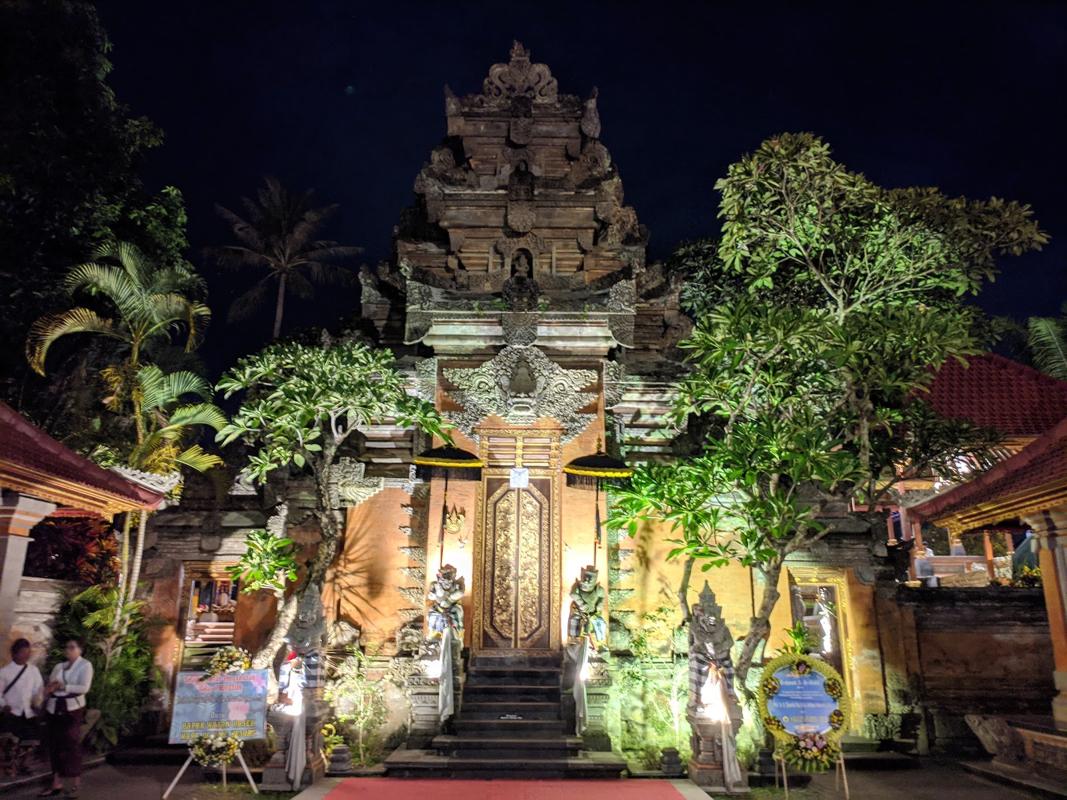
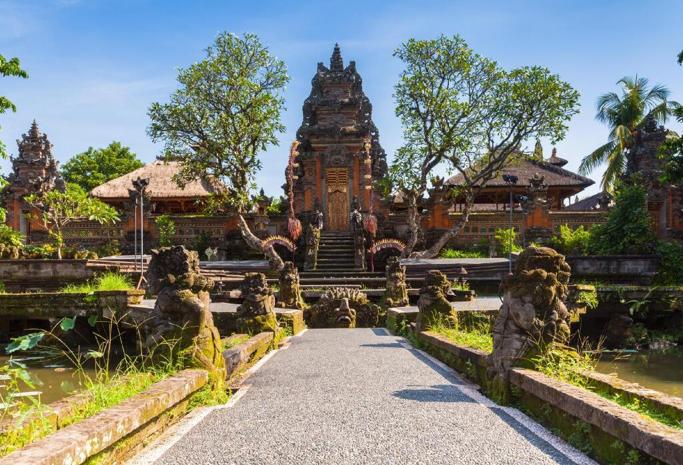
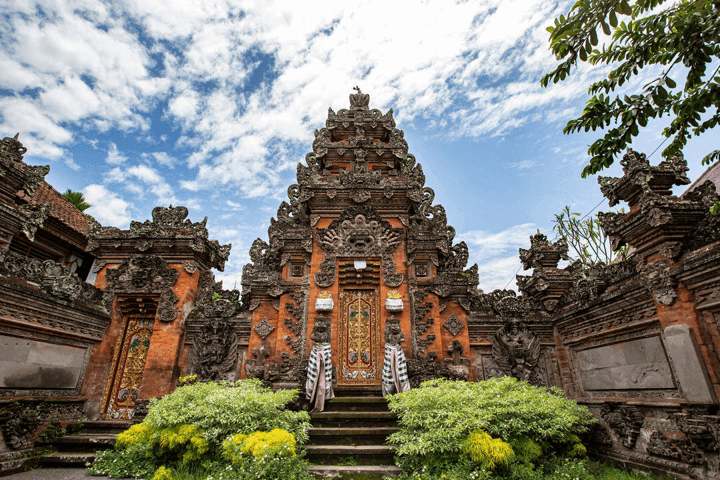
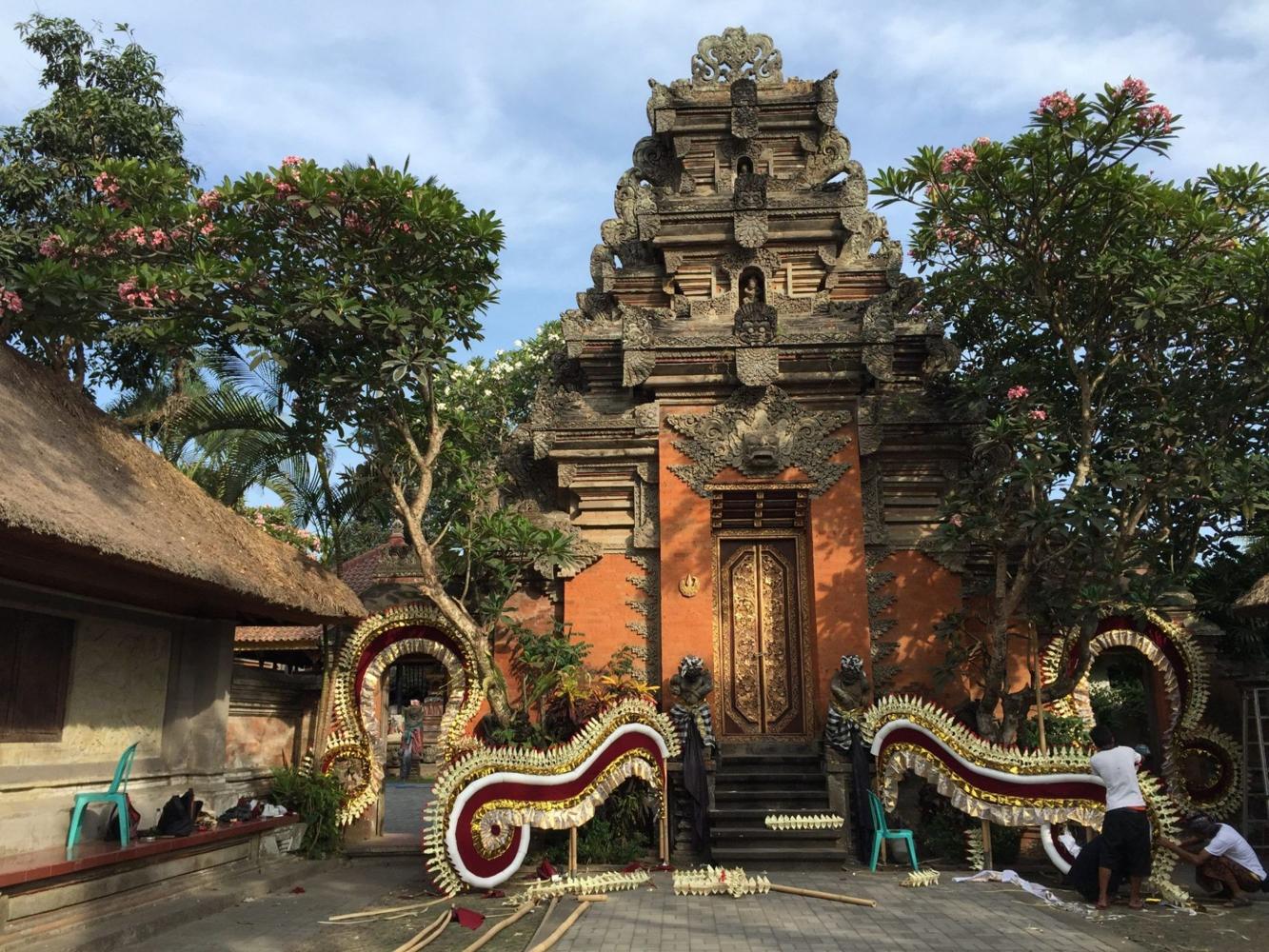
The architecture of the Royal Palace reflects the classic Balinese style, characterized by the use of stone statues, openwork stone carving, and traditional ornaments. Carved gates and doors with detailed patterns are the palace's calling card!
The main buildings and structures of the complex include several pavilions, altars, inner courtyards, and gardens.
The central inner courtyard of the palace attracts special attention due to its magnificent design. Here you can see:
- Elegant stone sculptures
- Trimmed shrubs
- Several buildings intended for holding important events and ceremonies.
A distinctive feature of the architecture is also "bale" — traditional Balinese pavilions intended for family gatherings and receiving guests.
Cultural and Tourist Significance
Today, the Ubud Royal Palace remains an important cultural center.
Regular traditional dance performances are held here, the most famous of which is the "Legong Dance". They usually take place in the evening by torchlight, creating an unusual magical atmosphere.
In addition, wedding ceremonies are often held in the palace.
In many tourist routes, the palace occupies one of the leading places. Many strive to visit it not only to get acquainted with the history and architecture but also to feel the unique atmosphere of Balinese culture.
Museums and Collections
There is no separate museum in the Ubud Royal Palace; the building itself can be considered a living museum.
Tourists have the opportunity to view architectural monuments, as well as some rooms where many historical items are preserved:
- Antique items
- Traditional jewelry
- Clothing of the royal family members and other cultural values.
Information for Tourists
The Ubud Royal Palace is open for visits every day from 8:00 to 18:00.
Entrance to the palace is free, however, to visit the dance performances, which usually start at 19:30, it is necessary to purchase tickets costing about 100,000 Indonesian rupiah (about 6-7 US dollars).
When visiting the palace, one should observe the rules of respect for Balinese culture. It is recommended to dress modestly (shoulders and knees must be covered), remove shoes when entering certain rooms, and behave respectfully towards local traditions and members of the royal family.
How to Get There
The palace is located in the center of Ubud, so it is easy to reach on foot from any point in the city. If you are coming from other cities in Bali, you can use a taxi or rent a scooter.
Conclusion
Visiting the Ubud Royal Palace is a unique opportunity to immerse yourself in the rich history and culture of Bali.
The palace is not only a masterpiece of Balinese architecture but also acts as a living museum where traditional ceremonies and performances take place daily.
And if you want to learn more about this and other attractions, contact our Russian-speaking guides :)