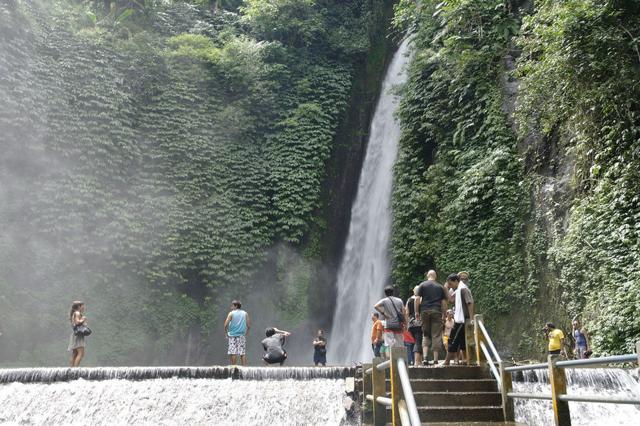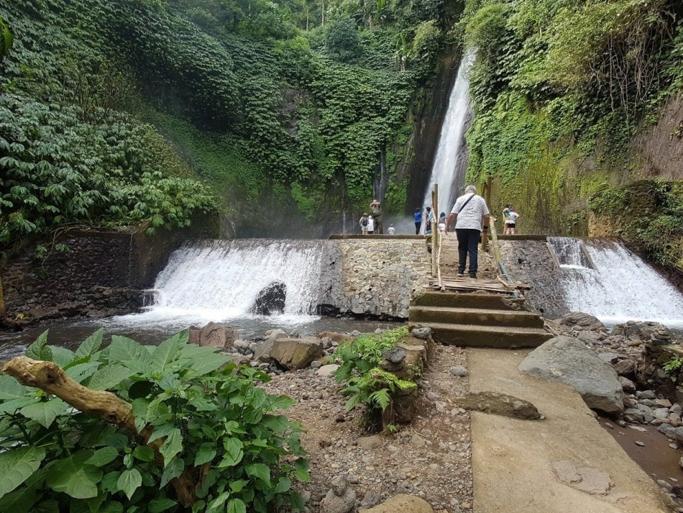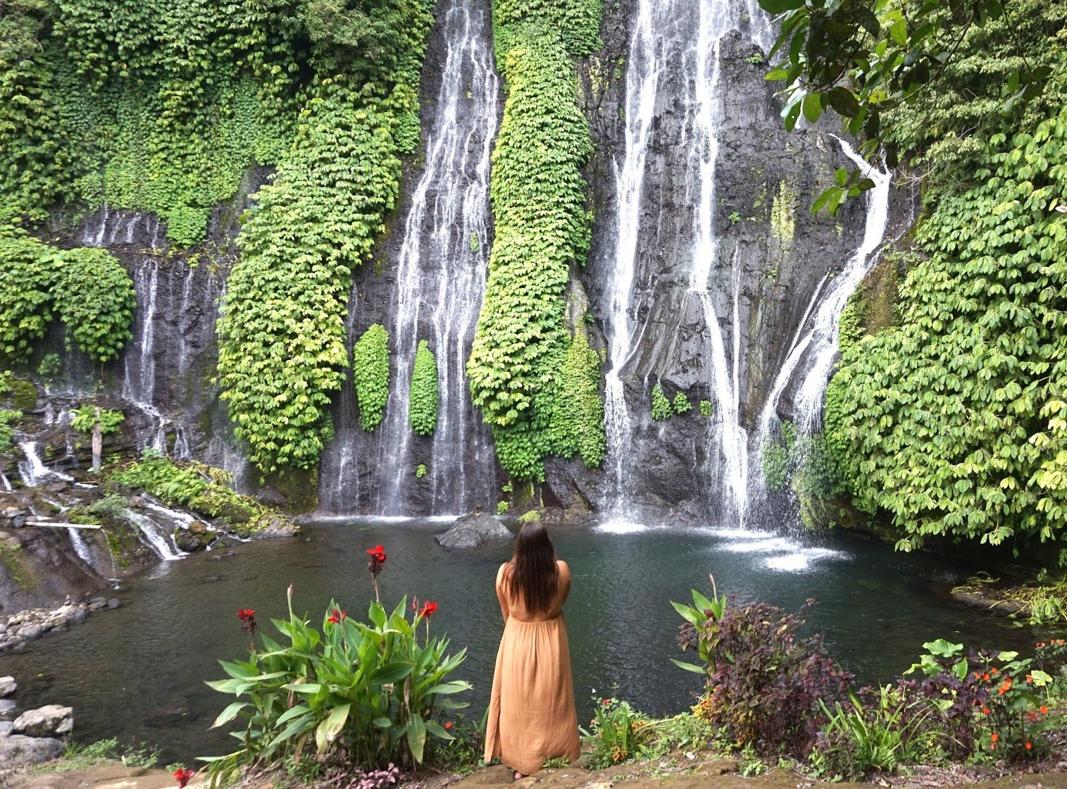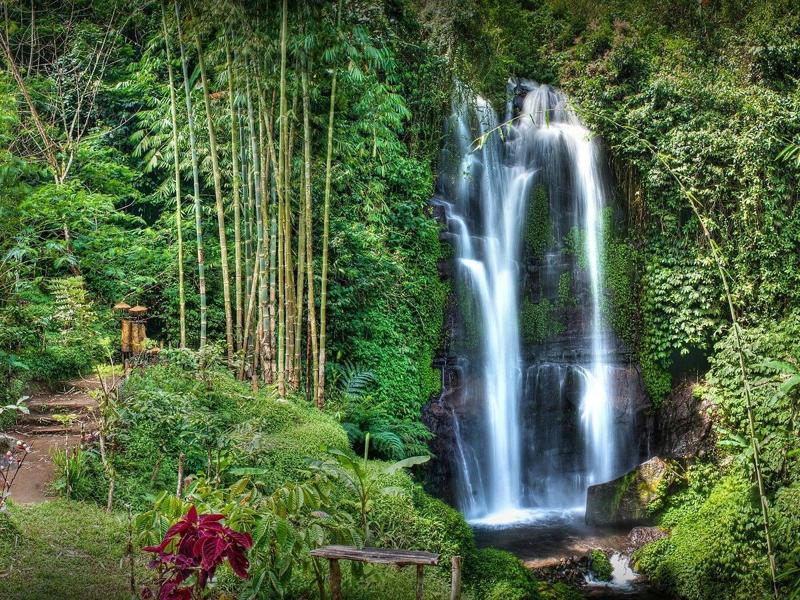
Munduk Waterfall is a hidden natural treasure awaiting its explorers in the depths of forests and mountains.
Despite not being as famous as other world-renowned waterfalls, Munduk lures tourists with its wild beauty and seclusion.
This stunning natural wonder, surrounded by dense forests and picturesque mountain landscapes, offers a unique opportunity to escape the hustle of city life and immerse oneself in a world of untouched nature.
History
The history of Munduk Waterfall goes back centuries.
The local population has long known of its existence, and the waterfall held an important place in the folklore and legends of local peoples.
It gained wide recognition in the tourism world only in recent decades, when more and more travelers began seeking new, unexplored places for recreation and adventure.
Today, Munduk Waterfall attracts both active recreation enthusiasts and those who simply want to enjoy the beauty of nature.
Geographical Location
Munduk Waterfall is located in a little-explored part of the country, in a picturesque region famous for its natural beauties and rich biodiversity.
The nearest major city from which you can reach the waterfall is Singaraja. The waterfall is located on the territory of the West Bali National Park (Bali Barat National Park), which protects unique landscapes and species of plants and animals.
Waterfall Description
The height of Munduk Waterfall is impressive. Falling from a quite impressive height of 15-20 meters, water crashes into a small lake surrounded by moss, boulders, and dense forest.
Depending on the season, the stream width varies, reaching its greatest width during periods after heavy rains or snowmelt in the mountains.
Moreover, the waterfall is not always single-tiered; it often consists of several cascades where water sequentially flows from one "pool" to another, sometimes creating an entire chain of mini-waterfalls.
The surrounding nature of Munduk Waterfall is no less enchanting. From the heights of chestnut trees draped over cliffs to coniferous forests growing higher up the slope — it seems time has stopped here.
The richness of flora and fauna makes this region a true paradise for biologists and naturalists: the forests near the waterfall are inhabited by diverse species of birds, mammals, and rare plants are also found, some of which are endemic to the region.
Visiting the Waterfall
Reaching Munduk Waterfall is not always easy, but the effort is worth it.
Usually, to get there, tourists start from the nearest settlement — the village of Munduk, located approximately 1–2 km from the waterfall. You can walk to Munduk Waterfall along specially marked trails passing through picturesque rice terraces and tropical jungles. The hike can take 20 to 40 minutes (depending on pace and chosen route), but if you include neighboring waterfalls in the route, such as Melanting or Labuan Aji, the walk can stretch to several hours.
The most favorable time to visit Munduk Waterfall is the rainy season (November to March), when the waterfall is most full-flowing and the surrounding nature stuns with lush greenery. However, during this time trails can be slippery. Those who prefer drier weather choose April–October — during this period walking is easier, and in autumn (especially September–October) the forest acquires especially saturated hues.
For a safe and comfortable tour, it is recommended to bring sturdy shoes for rough terrain, water, snacks, and of course a camera to capture unforgettable moments. Don't forget sun and insect protection, as well as warm clothes in case of weather changes.
Tourist Infrastructure
Despite relative seclusion, tourist infrastructure near Munduk Waterfall is gradually developing.
In some national parks and reserves near the waterfall, you can find marked tourist routes and viewing platforms offering beautiful views of the waterfall and its surroundings.
In the nearest cities and villages to the waterfall, there are usually hotels and guesthouses for those who prefer to stay in more comfortable conditions.
For closer contact with nature, there are campsites and tent camps. It is always worth checking the possibility of camping directly near the waterfall, as in some protected areas this may be prohibited.
As a rule, there are also additional entertainments in the waterfall area — from hiking tours in the forest to fishing in rivers flowing through the reserve.
Interesting Facts and Legends
Many legends and interesting facts are associated with Munduk Waterfall.
One old legend states that the waterfall appeared at the site where a great battle between two mountain spirits once took place. These spirits, symbolizing strong opposing forces, fought for a long time, and from their tears a turbulent stream formed, which eventually turned into a majestic waterfall whose waters possess healing properties.
Also, Munduk Waterfall has sacred significance for local residents — it plays an important role in traditional water-related rituals, especially during holidays in the rainy season.
Conclusion
Munduk Waterfall is a natural wonder worth seeing at least once in a lifetime.
The combination of the waterfall's majestic beauty, the diversity of the surrounding landscape, and the feeling of complete tranquility makes this place ideal for those seeking something special.
Enjoying the beauty of the waterfall, it is important to remember to treat nature with care and not leave traces of human activity behind.