Mount Agung is one of the main natural attractions of the Indonesian island of Bali, with a height of 3142 meters!
It is the highest mountain on the island, having not only geographical but also deep cultural and spiritual significance for the local population.
Agung is rightfully considered the "sacred mountain" and is an integral part of the life and beliefs of the Balinese.
In this article, we will examine the geological characteristics of Mount Agung, its eruption history, cultural significance, impact on tourism, and practical aspects of visiting and climbing this majestic volcano.
Geographical Location and Physical Characteristics
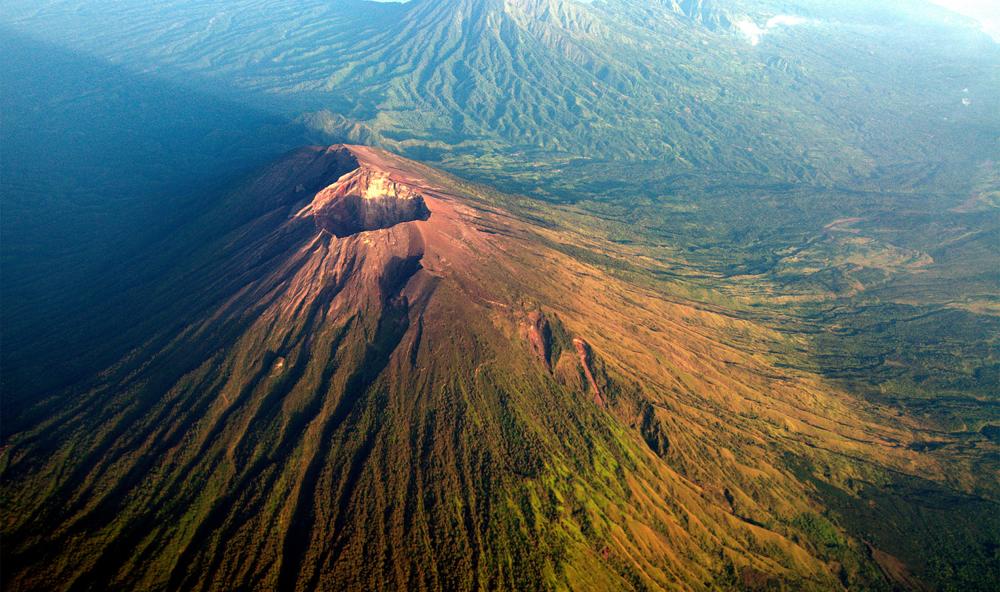
Mount Agung is located in the eastern part of the island of Bali, in the Karangasem region. It is a stratovolcano formed as a result of the tectonic activity of the subduction of the Indo-Australian plate under the Eurasian plate. Agung's eruptions occur mainly through the central vent, with additional vents located on the flanks.
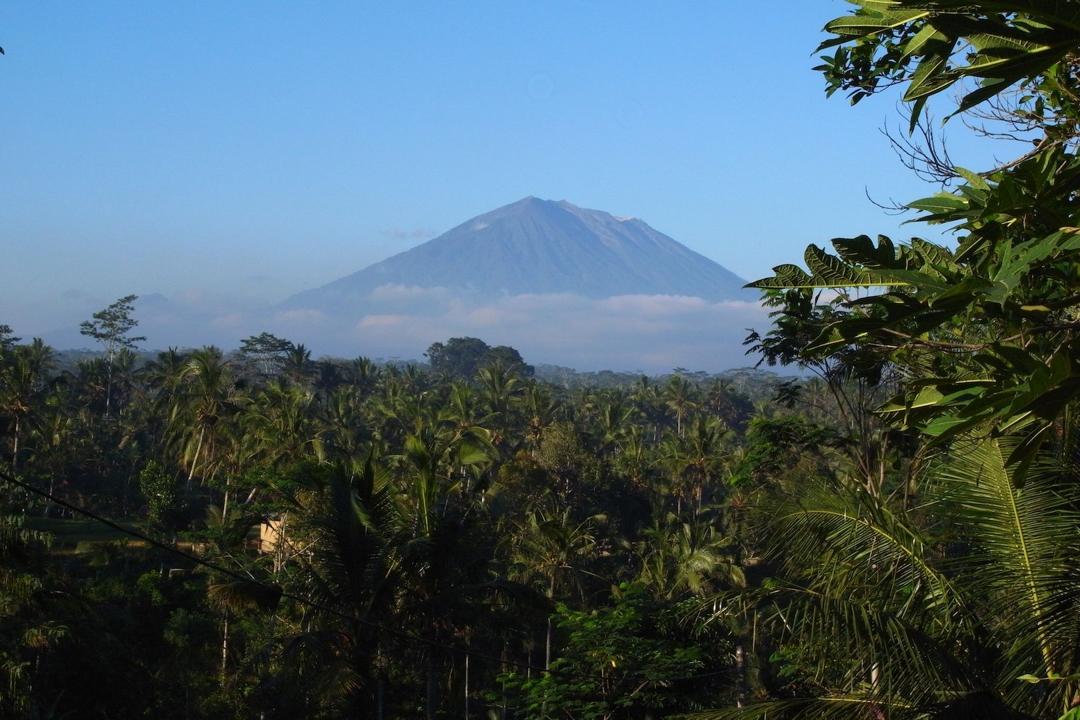
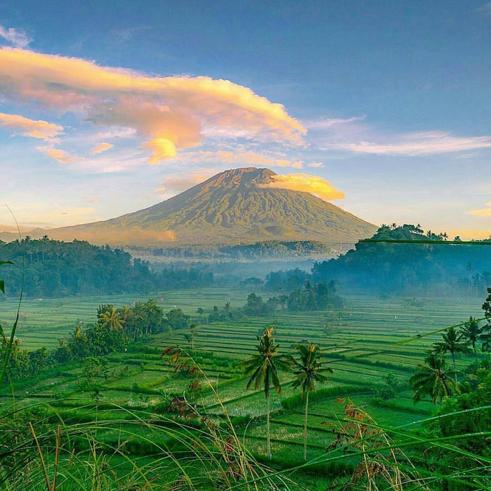
The volcano's height is 3142 meters above sea level, making it the highest point on the island of Bali. On a clear day, the summit of Mount Agung can be seen from almost anywhere on the island. At the foot of the mountain lies the symbolic "mother of temples" of Bali — Pura Besakih, which is the largest and most important temple complex on the island.
Agung is part of the Pacific Ring of Fire, known for its high volcanic and seismic activity. The volcano's shape is almost symmetrical with steep slopes covered in vegetation at lower elevations, transitioning to a more rocky and barren surface at higher altitudes.
Eruption History
Little is known about the primordial and prehistoric eruption history of Mount Agung, however, the most significant eruptions were recorded in the modern period.
The most powerful eruption occurred in 1963, becoming one of the largest volcanic eruptions of the 20th century. It began on March 17, 1963, and lasted about a year!
As a result of the 1963 eruption, about 1500 people died, and another 200,000 people were left homeless. Ash and lava emissions significantly affected the global climate, lowering average global temperatures by 0.1-0.4°C. A significant portion of agricultural land was also destroyed, impacting Bali's economy for many years.
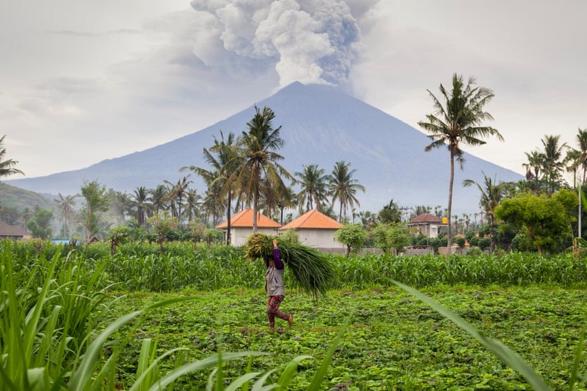
In 2017, Agung showed increased activity again, leading to the evacuation of tens of thousands of residents and the temporary closure of Bali's airports. This episode of activity, while not leading to catastrophic consequences, reminded everyone that Agung is an active and potentially dangerous volcano.
Cultural and Spiritual Significance
For Balinese Hindus, Mount Agung is considered the "navel of the world" and the place where gods live. According to beliefs, Agung is a replica of the sacred Mount Meru (which is the cosmic axis in Hinduism). The Balinese believe that the volcano is the home of gods and ancestral spirits.
On the western slope of Mount Agung, at an altitude of about 1000 meters above sea level, lies the Pura Besakih complex, known as the "mother of temples". It consists of 23 separate temples, each dedicated to various gods and goddesses. Pura Besakih is one of the most important religious sites in Bali and attracts numerous pilgrims and tourists.
Additionally, Agung plays a central role in the spiritual life of the Balinese. The Balinese calendar and many religious holidays are linked to cycles and rituals dedicated to the volcano.
After the 1963 eruption, which occurred during the Eka Dasa Rudra season (a great purification ritual held once every hundred years), many Balinese believed the eruption was a result of the ceremony being performed incorrectly. This led to the emergence of a series of new rituals and beliefs related to "appeasing" the volcano.
Impact on Tourism
Mount Agung is one of the main tourist attractions in Bali.
The view of this majestic volcano attracts many photographers and nature lovers from all over the world. However, Agung's increased activity in 2017 led to a temporary drop in tourist flow to Bali due to fears of an eruption and associated inconveniences, such as the closure of Ngurah Rai Airport in Denpasar.
Despite this, for most tourists, Mount Agung represents an existing opportunity to touch natural splendor. Many tourists aspire to climb to the volcano's summit to enjoy the breathtaking view of the island of Bali and the neighboring islands of Indonesia.
The ascent to the summit usually begins early in the morning (around 2 AM) to reach the top by sunrise, when conditions for a panoramic view become ideal.
Some travel agencies, including ours, offer organized tours to Agung accompanied by experienced guides. Such tours include not only the summit climb but also visits to nearby temples (primarily Pura Besakih) and excursions to surrounding villages.
Visiting and Climbing Mount Agung
Climbing Mount Agung is a serious and often exhausting undertaking requiring good physical fitness.
The most popular route starts from the Pura Besakih temple and leads directly to the summit. This route is quite difficult and takes 6 to 10 hours, depending on the pace and physical condition of the participants. There is also a longer but less steep route starting from the north side of the volcano, from the foot of the mountain, passing through the village of Sela.
For the climb up Agung, one must be prepared for changeable weather. There are no guarantees that the weather at the summit will be clear even in the dry season. Regardless of the time of year, it can be quite cool at the summit, so warm clothing is recommended. It is also important to bring enough water (at least 2-3 liters per person), flashlights (for the night ascent), and sunscreen.
The Balinese believe that climbing the volcano without a guide can be risky not only due to physical difficulties but also due to "spiritual" dangers. Therefore, it is essential to hire a professional guide who not only knows the route but also understands the importance of respecting the sacred mountain! Contact us for this)
Conclusion
Mount Agung is not just a geological phenomenon; it is a symbol of Bali, embodying its spiritual and cultural identity.
The sacred mountain dominating the island personifies both the power of nature and the deep spiritual heritage of the Balinese. Visiting Agung is a unique opportunity not only to gaze at the giant volcano but also to get closer acquainted with the cultural and religious traditions of Bali, to experience the power of natural splendor and human faith.
Despite the potential danger posed by an active volcano, its beauty and significance to Balinese culture make Agung one of the most amazing and unforgettable attractions on the island of Bali. The majestic mountain peak, shrouded in legends, continues to beckon brave travelers and adventure seekers from all over the world.